What causes bone loss in teeth? Periodontitis, an advanced form of gum disease, is the leading cause. Bacteria under the gumline set off long-term inflammation that damages the bone holding your teeth in place. Missing teeth, dental infections, injuries, smoking, and some medical conditions can also play a part.
Some of these factors harm the supporting bone directly. Others raise the risk of gum disease or change how healthy your jawbone stays.
 Usually one of four things:
 Some habits make gum disease more likely or slow healing. Here are other reasons for bone loss and deterioration:
 Not every cause of bone loss can be prevented, but you can lower your risk. Bone already lost may not grow back, so early steps matter.
What Causes Bone Loss in Your Teeth and Gums?
 Usually one of four things:
- Long-term gum inflammation
- Lost tooth
- Root infection
- An injury
Gum Disease (Periodontitis)
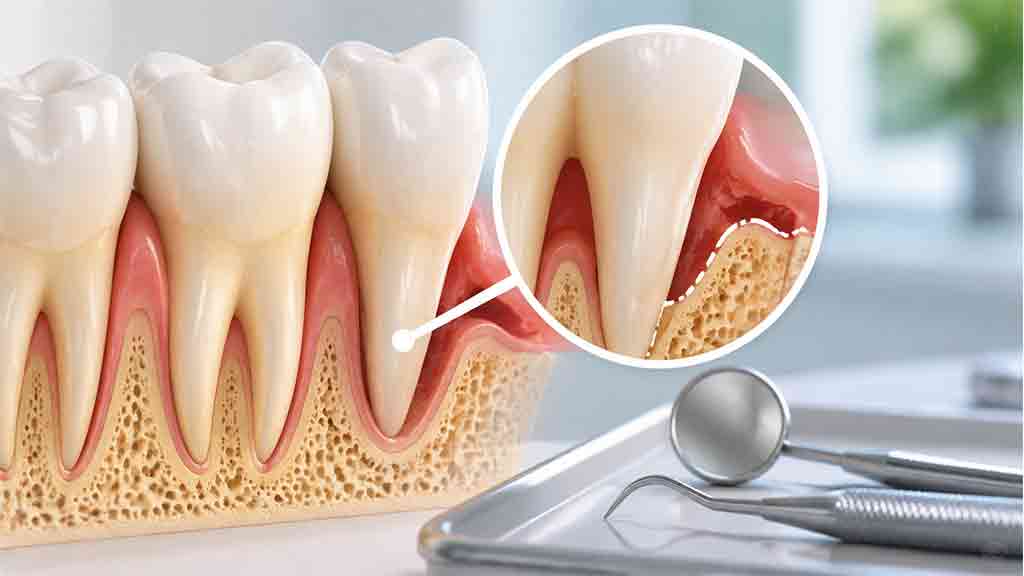
Periodontitis is the leading cause of bone loss around natural teeth. It builds in steps:- Plaque, a sticky film of bacteria, builds up near the gumline.
- Plaque left on the teeth hardens into tartar, which brushing cannot remove.
- The gums turn red and swollen.
- The gums pull away and form deep gaps called periodontal pockets.
- Bacteria spread into the pockets, and the supporting tissue and bone break down.
Missing Teeth and Tooth Extractions
Tooth roots send small forces into the jawbone each time you chew, and those forces keep the bone in place. After a tooth is lost, the bone around the empty socket loses that signal, and the body slowly absorbs it. The ridge that held the tooth gets lower and narrower, which dentists call alveolar ridge resorption. This differs from periodontitis, which harms bone around a tooth that is still there. Less bone can make a replacement harder to place, so a dentist may discuss dental implants early.Dental Infections and Untreated Tooth Problems
Deep decay can reach the pulp, the soft center of the tooth. An untreated infection can travel down the root and form an abscess at the root tip, and the nearby bone can wear away. This differs from periodontitis, which starts at the gumline and affects bone along the sides of the root. A cracked root can cause similar local damage because bacteria enter through the crack.Facial Trauma or Dental Injury
A hard hit can fracture the jaw, knock out a tooth, crack a root, or cut the blood supply to nearby bone. Bone without enough blood may weaken over time. This damage stays local and has nothing to do with gum disease. See a dentist soon after a knocked-out or loosened tooth.Chemotherapy or Radiation
Chemotherapy does not usually destroy the jawbone, but it can weaken immunity, slow healing, and raise infection risk (NCI). Radiation to the head and neck is different. It can damage the jawbone and its blood vessels and lead to osteoradionecrosis, where bone tissue dies. That is separate from periodontal bone loss. See a dentist before cancer treatment starts, and let your dentist and oncology team share information.Jaw Cysts, Tumors, and Other Lesions
Cysts, tumors, and other lesions can slowly wear away bone in one part of the jaw. Most are not cancer, and many cause no pain at first. They are far less common than gum disease, and bone loss usually does not mean cancer. Bone loss in one spot with healthy gums and no clear reason needs a professional exam.What Lifestyle Factors Can Increase the Risk of Bone Loss?
 Some habits make gum disease more likely or slow healing. Here are other reasons for bone loss and deterioration:
Smoking and Tobacco Use
What causes bone loss in teeth? Well, smoking is a big issue. It raises the risk a great deal, though not in every person. Smoking weakens the defense against gum infection and slows healing, so smokers are more likely to develop severe periodontitis and lose supporting bone (CDC). Gum treatment also works less well in people who keep smoking. The risk covers cigarettes and smokeless tobacco.Ill-Fitting Dentures and Jawbone Pressure
Dentures that fit poorly press unevenly on the ridge, the bone left after teeth are lost, and can add to its shrinkage. That is bone loss where teeth are already gone, not periodontal bone loss around natural roots. As the jaw changes shape, a denture can also loosen over time. See your dentist if a denture slips or hurts.Teeth Grinding, Clenching, and Uneven Bite Forces
Grinding and clenching put heavy force on teeth, but the evidence does not show that they destroy bone. A consensus review (AAP/EFP) found no evidence in humans that heavy bite forces start periodontitis or attachment loss. Grinding can wear teeth and strain the jaw. When gum disease has already thinned the bone, extra force, including uneven bite forces from tilted teeth, may make teeth feel looser.Diabetes and Periodontal Bone Loss
What causes bone loss in teeth? Well, diabetes does not automatically cause bone loss in teeth, but it raises the risk and severity of gum disease. Diabetic people are 2 to 4 times more likely to develop periodontal disease (American Academy of Periodontology), and their disease tends to involve more bone loss. Gum inflammation can also make blood sugar harder to control. Steady blood sugar and regular gum checkups help protect both.Osteoporosis and Other Systemic Conditions
Osteoporosis lowers bone density throughout the body. That can leave the jawbone that anchors your teeth thinner and less able to resist damage from gum disease. Studies link osteoporosis to bone loss around teeth, but it does not mean your teeth will lose support. Tell your dentist if you have it.What Medications Cause Bone Loss in Teeth?
Most medicines do not harm the bone around your teeth. A small group is among the causes of bone loss in teeth, and a few others raise your risk of gum disease. The medicines linked to jawbone problems are Bisphosphonates, such as alendronate, risedronate, ibandronate, and zoledronic acid, and also Denosumab. Doctors prescribe these for osteoporosis and some cancers. In rare cases, they can lead to medication-related osteonecrosis of the jaw (MRONJ), where an area of the jawbone does not heal and stays exposed (American Dental Association). It is very rare at osteoporosis doses and usually follows a tooth removal or other jaw surgery. MRONJ is not the same as bone loss from gum disease. Other medicines work in a less direct way. Many cause dry mouth, and some seizure and blood pressure medicines can swell the gums. Both make plaque harder to clean away, which can raise the risk of gum disease over time. Tell your dentist about every medicine you take, including osteoporosis pills and injections. Never stop or change a medicine on your own. Only your prescribing doctor should make that decision.How to Prevent Bone Loss in Teeth
 Not every cause of bone loss can be prevented, but you can lower your risk. Bone already lost may not grow back, so early steps matter.
- Brush twice a day. Use fluoride toothpaste and clean between your teeth daily to help control plaque.
- Keep regular dental checkups, and ask your dentist about a gum evaluation when it makes sense for you.
- Get care for swollen, red, or bleeding gums before gum disease moves deeper.
- Avoid smoking and tobacco, which raise the risk of severe gum disease and slow healing.
- Work with your doctor or healthcare team to manage diabetes and other conditions that can affect your gums.
- Tell your dentist about your prescription medicines, osteoporosis treatment, chemotherapy, and radiation therapy.
- Have your dentures checked if they feel loose or uncomfortable, since a poor fit can put pressure on the bone under them.